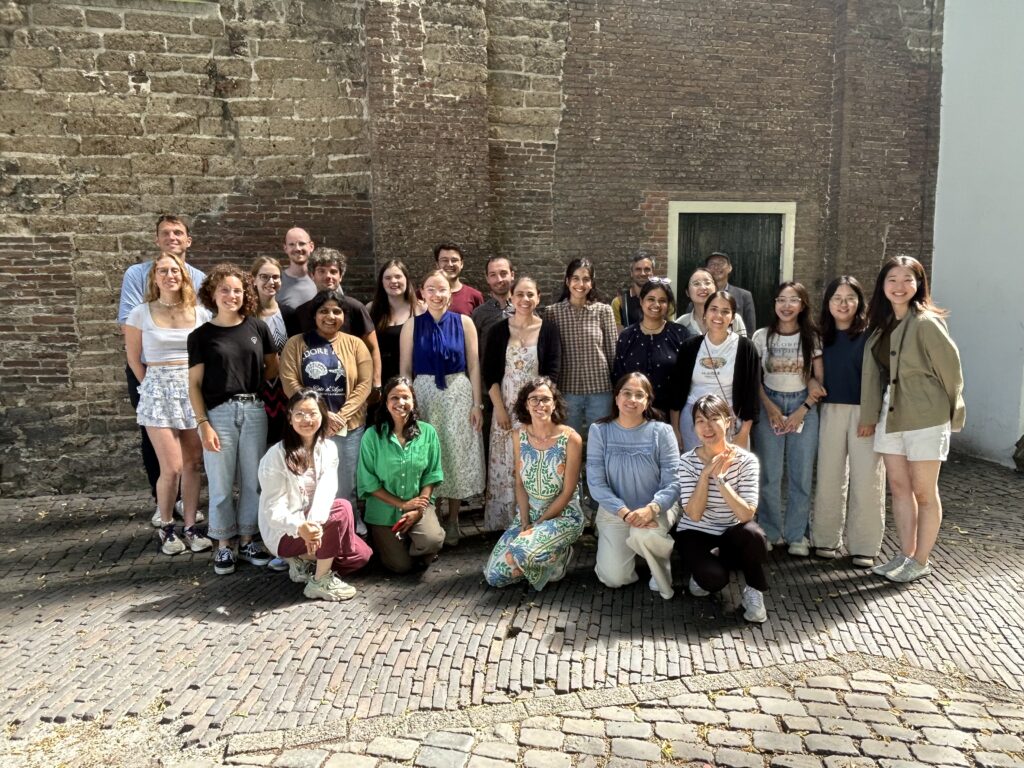
From July 7–11, 2025, we gathered in Utrecht, the Netherlands, for an inspiring and intensive week at the PRISMA Summer School on Climate Impacts and Equity. Designed for advanced PhD students and early-career researchers working with integrated assessment models (IAMs), the week fostered critical discussions around the integration of equity, climate impacts, finance, and adaptation into modeling frameworks.
What we explored:
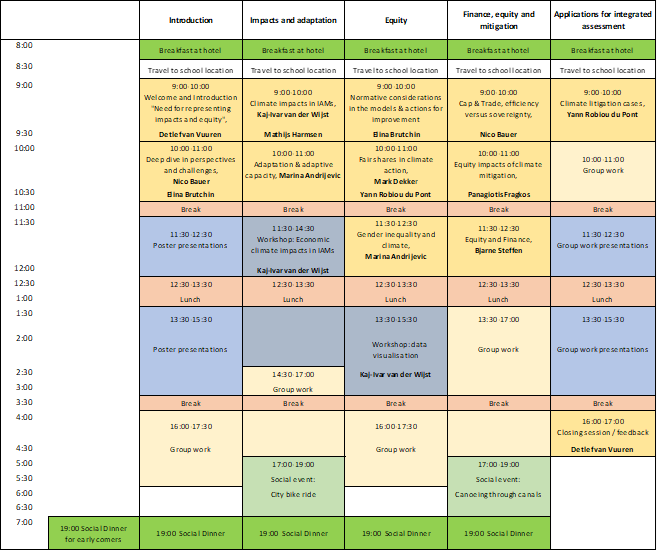
Participants joined lectures, workshops, and group activities that spanned:
- Representation of climate impacts and damages in IAMs
- Climate justice frameworks (procedural, corrective, distributive, etc.)
- Fair share analysis and burden-sharing mechanisms
- Gender inequality and adaptive capacity
- Visualizing data and uncertainty in IAM scenarios
- Equity in climate finance and capital costs
- Climate litigation and legal perspectives on responsibility
Faculty included:
Detlef van Vuuren, Marina Andrijevic, Nico Bauer, Elina Brutschin, Mark Dekker, Panagiotis Fragkos, Yann Robiou du Pont, Bjarne Steffen, Kaj-Ivar van der Wijst, and Mathijs Harmsen.
Key Takeaways:
- IAMs are evolving to incorporate not just mitigation, but also impacts, adaptation, and equity lenses.
- A growing emphasis on justice and feasibility in scenario development is reshaping research priorities.
- Adaptive capacity and finance are key levers for just transitions.
- Fairness is not just a normative question—it shapes policy relevance and societal acceptance.
- Gender, governance, and inequality are crucial, quantifiable factors in model-based climate analysis.
Resources now available:
We’re happy to share the materials from the week below.
Special thanks to the organizing team:
Dr. Mathijs Harmsen and Constance Crassier (PBL & Utrecht University) for their flawless coordination and commitment.
Stay connected:
We aim to keep the PRISMA community alive through continued collaborations, stakeholder workshops, and webinars.
Follow PRISMA’s results and activities on social media, via the #net0prisma.
This Summer School has received funding from the European Union’s Horizon Europe research and innovation programme under grant agreement No. 101081604 – PRISMA.