
Date: Tuesday, 30 June 2026
Time: 14:15 – 16:00
Format: Session at World Congress of Environmental and Resource Economists 2026, Lisbon
Participants: Massimo Tavoni (moderator), Oystein Borsum (Central Bank of Norway), Heather Grabbe (Bruegel Institute), Nicola Ranger (LSE), Billy Pizer (RFF), Stavros Zenios (Durham University)
The PRISMA project hosted a workshop at the 2026 World Congress of Environmental and Resource Economists (WCERE). The session brought together researchers in environmental economics and policy to examine how climate change and nature degradation create growing risks for financial stability and the wider economy.
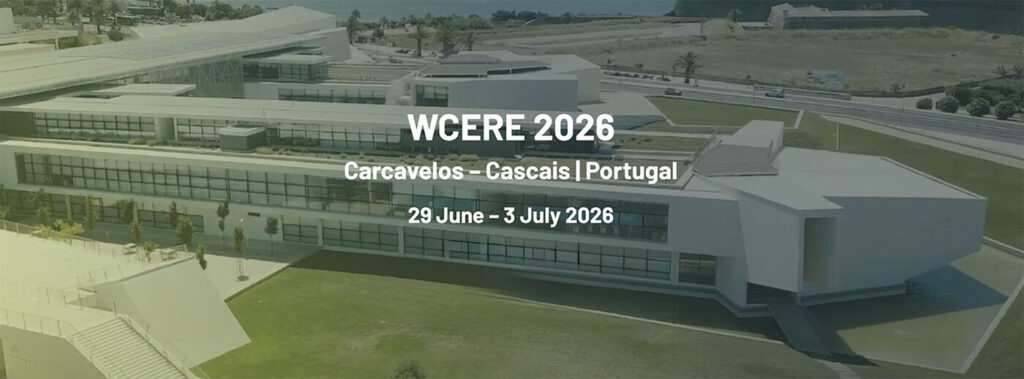
PRISMA participated in the 2026 World Congress of Environmental and Resource Economists (WCERE) with a central message: Climate change and nature degradation are no longer distant environmental challenges. They are emerging sources of financial and macroeconomic risk.
The session brought together experts from the fields of environmental economics and policy to discuss the impacts of climate and nature-related risks for central banks, financial institutions and public authorities. The discussion highlighted that these risks are no longer distant scenarios, but also that they remain difficult to quantify.
The panel, representing experts from the Central Bank of Norway, the London School of Economics and Political Science, Durham University, Resources for the Future and Bruegel, emphasised that climate hazards can propagate through multiple channels, including productivity losses, supply-chain disruptions, or negative effects on insurance markets, asset values and sovereign finances. Adaptation and risk management investments can reduce future economic costs, but these require stronger coordination and long-term planning.
Implications for modelling
The discussion highlighted that there is a need for a new generation of macro-financial models that could better that better integrate climate, nature and economic dynamics under deep uncertainty. Current models, in comparison, often struggle to capture systemic risks, feedback loops and interactions between physical hazards, adaptation choices, financial markets and public debt.
Future modelling efforts should focus on policy-relevant scenarios, stress-testing approaches and improved links between climate-economic models, financial risk frameworks and sovereign debt assessments.
The panel agreed that collaboration between researchers, central banks and policymakers is essential to ensure models can support real-world risk management and policy decisions. The workshop itself was a tangible example of successful collaboration.
This event has received funding from the European Union’s Horizon Europe research and innovation programme under grant agreement No. 101081604 – PRISMA. Views and opinions expressed are however those of the author(s) only and do not necessarily reflect those of the European Union or the European Climate, Infrastructure and Environment Executive Agency (CINEA). Neither the European Union nor the granting authority can be held responsible for them.