From June 15–19, 2026, we gathered in Geneva, Switzerland, for an intensive and stimulating week at the PRISMA Summer School on Uncertainty in Energy and Integrated Assessment Models of Climate Change. Organised by the Renewable Energy Systems group at the University of Geneva, the school brought together 29 advanced PhD students and early-career researchers from 16 nationalities and 23 institutions worldwide to engage with cutting-edge methods for handling and communicating uncertainty in energy system and integrated assessment models.

What we explored:
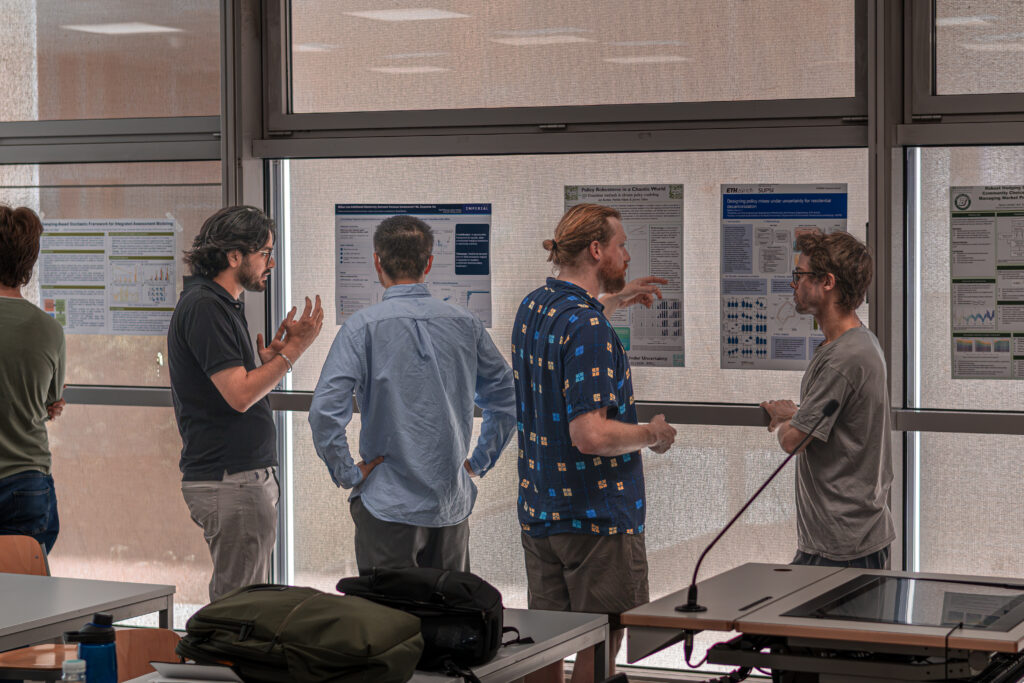
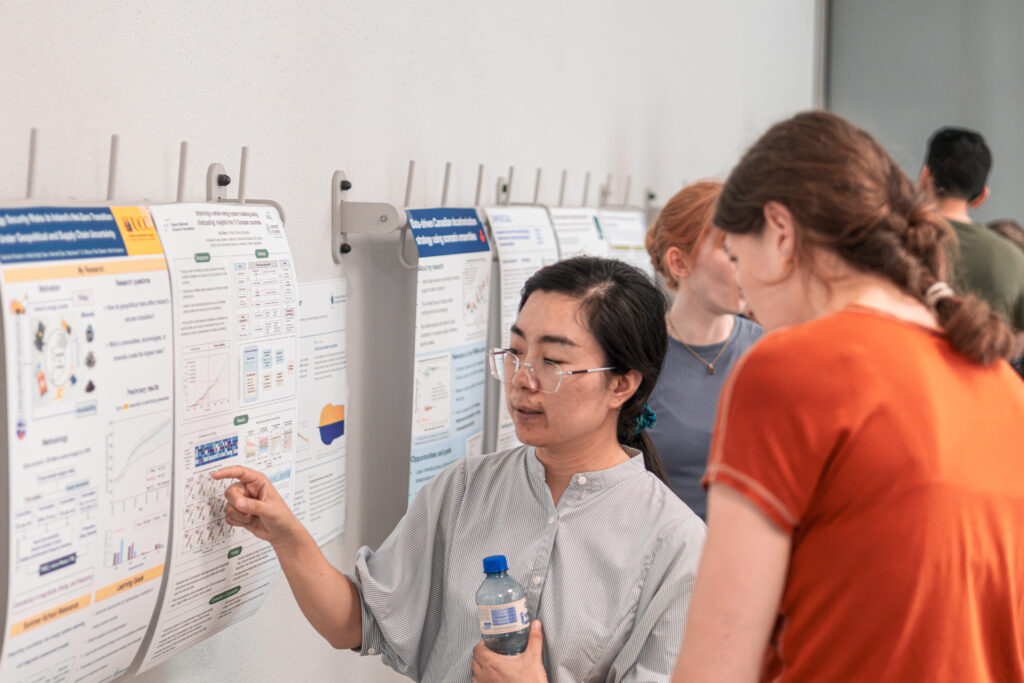
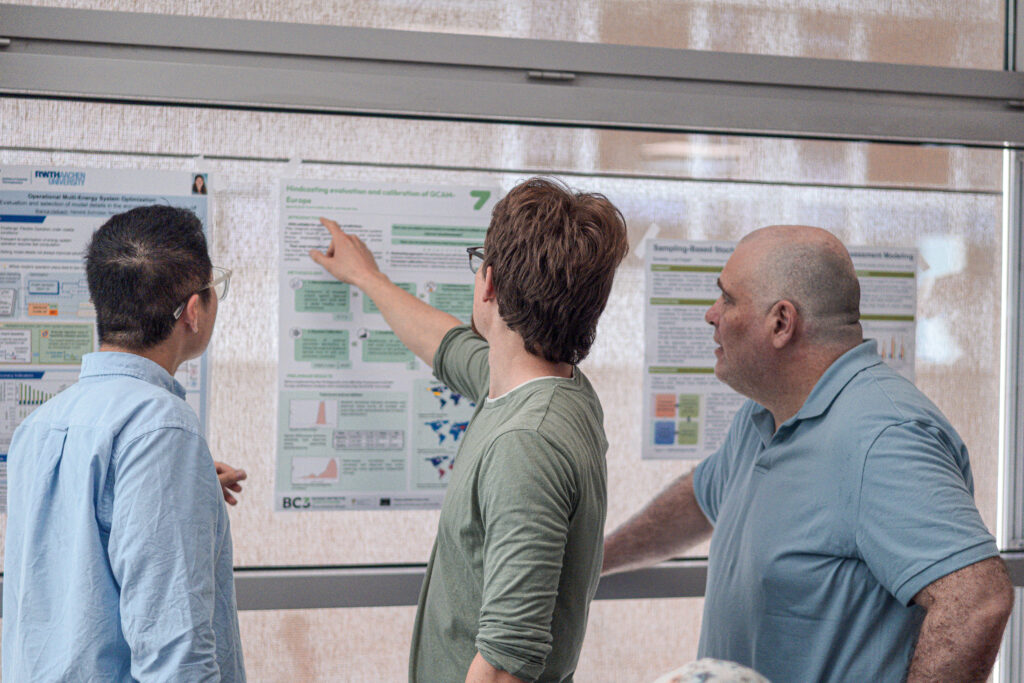
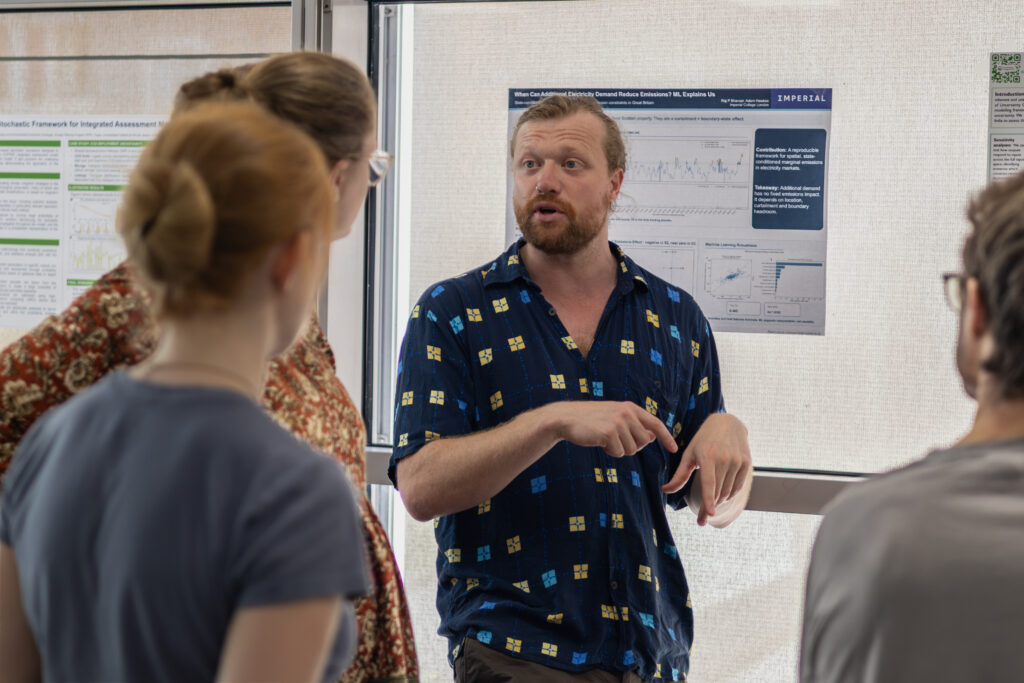
Participants joined lectures, hands-on sessions, group work, and poster presentations that spanned:
- The nature of uncertainty in policy-relevant modelling — from epistemological foundations to practical implications
- Global sensitivity analysis and Sobol’ indices
- Probabilistic methods for long-run technological change
- Robust decision making and scenario discovery
- Decision tree approaches for navigating deep uncertainty
- Interpretable machine learning and SHAP values
- Expert elicitation methods and cognitive bias mitigation
- Model accuracy, uncertainty reduction, and scenario diversity
Faculty included:
Evelina Trutnevyte, Céline Guivarch, Andrea Saltelli, Giacomo Marangoni, François Lafond, and Stefano Moret.
Key Takeaways:
- Uncertainty in IAMs is not merely a technical nuisance — it is a political and epistemic condition that demands transparency.
- Under deep uncertainty, robustness is a more appropriate target than optimality.
- One-at-a-time sensitivity analysis is geometrically insufficient: global methods are essential for high-dimensional models.
- Probabilistic forecasting, machine learning interpretability, and expert elicitation offer complementary tools for uncertainty characterisation.
- Scenario diversity, near-optimal analysis, and preference integration extend the reach of model-based uncertainty assessment.


Resources available:
The following materials from the week are now available:
Special thanks to the organising team:
Prof. Evelina Trutnevyte, Dr. Nik Zielonka, and Ricardo Flores (University of Geneva) for their outstanding coordination and dedication throughout the week. The school and the adjacent expert workshop were also co-funded by the Swiss National Science Foundation project “Accuracy of long-range national energy projections” (grant no. 186834).
Stay connected:
We aim to keep the PRISMA community alive through continued collaborations, stakeholder workshops, and webinars. Follow PRISMA’s results and activities on social media, via the #net0prisma.
This Summer School has received funding from the European Union’s Horizon Europe research and innovation programme under grant agreement No. 101081604 – PRISMA. The school and the adjacent expert workshop were also co-funded by the Swiss National Science Foundation project “Accuracy of long-range national energy projections” (grant no. 186834).